
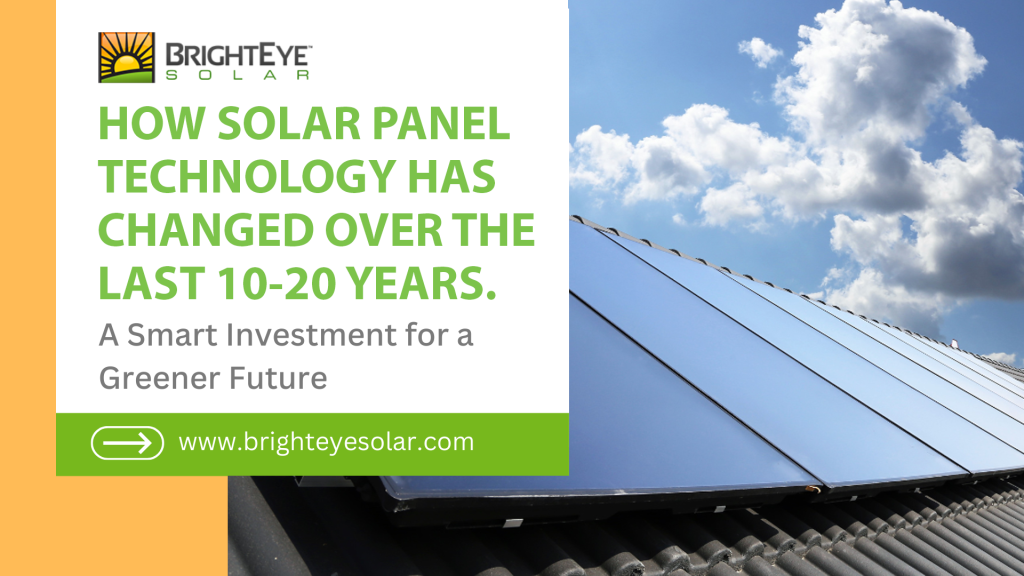
How Modern Solar Panel Technology has Changed Over the Last 10-20 Years
If you’ve looked into solar energy in the past, you might still picture bulky panels, limited efficiency, and technology that felt experimental. But solar today is very different from what it was even a decade ago.
Thanks to major advances in panel design, materials, and supporting equipment, modern solar systems are more powerful, affordable, durable, attractive, and more reliable than ever before. For homeowners considering solar now, the technology has truly caught up with the promise.
Here’s how today’s solar panel technology compares to systems from 10–20 years ago—and why that matters for your home.
Higher Efficiency Means More Power From Fewer Panels
One of the biggest improvements in solar technology is efficiency. Years ago, most residential solar panels converted only about 12–15% of sunlight into usable electricity. Homeowners needed more panels to meet their energy needs, which required more roof space and often created a cluttered look. Modern solar panels regularly reach 20–23% efficiency, meaning they produce significantly more electricity from the same amount of sunlight.
What this means for homeowners:
- - Fewer panels needed on the roof
- - Cleaner, more streamlined system designs
- - Better production even on smaller roofs
Better Performance in Heat, Shade, and Low-Light Conditions
Older solar panels were more sensitive to real-world conditions. High temperatures, partial shade, or cloudy weather could noticeably reduce output. New solar technology is designed to perform better in:
- - Hot climates
- - Partial shading from trees or roof features
- - Morning, evening, and overcast conditions
Why this matters:
Your system produces energy more consistently throughout the day and across seasons, leading to more reliable savings year-round.
Stronger, More Durable Panels Built to Last
Early solar systems didn’t always have the longevity homeowners expect today. Warranties were shorter, and panels weren’t always built for extreme weather. Modern solar panels are engineered to withstand:
- - Heavy rain and snow
- - High winds
- - Hail and extreme temperature swings
Most systems now include 25–30 year performance warranties, giving homeowners confidence that their investment is protected for decades.
Sleeker, More Attractive Solar Designs
Solar panels have come a long way aesthetically. In the past, panels were bulky, shiny, and stood out sharply against the roof. Today’s designs focus on blending in rather than standing out. Modern systems often feature:
- - All-black panels
- - Low-profile mounting
- - Concealed wiring and cleaner layouts
The result: solar that enhances your home without compromising curb appeal—an important factor for many homeowners and HOAs.
Smarter Inverters and Panel-Level Technology
Older solar systems commonly used string inverters, where all panels were connected together. If one panel underperformed due to shade or debris, the entire system’s output could drop. Today’s systems often use microinverters or power optimizers, allowing each panel to operate independently.
Benefits include:
- - Higher overall energy production
- - Less impact from shading or panel issues
- - Real-time monitoring through a mobile app
Homeowners can now track performance, identify issues quickly, and better understand their energy usage.
Slower Degradation Over Time
All solar panels gradually produce slightly less energy over time, but modern panels degrade much more slowly than older models. Many new panels lose less than 0.5% of output per year, meaning they continue producing strong energy levels well into the future. For homeowners, that means:
- - Better long-term savings
- - More predictable performance
- - Higher lifetime value from the system
Improved Safety Standards and Technology
Solar safety has also advanced significantly. Modern systems include:
- - Rapid shutdown capabilities
- - Safer wiring and grounding
- - Compliance with updated electrical and fire codes
These improvements make today’s solar systems safer for families, installers, and first responders.
Easier Installation and Better Roof Protection
Installation methods have improved alongside panel technology. New mounting systems require:
- - Fewer roof penetrations
- - Faster installation times
- - Improved waterproofing
This results in less disruption during solar installation and better long-term roof protection.
Designed for the Future of Energy
Unlike older systems, modern solar is designed with flexibility in mind. Today’s systems are:
- - Battery-ready
- - Compatible with smart home technology
- - Easier to expand as energy needs change
This makes solar a future-proof investment that can adapt as technology and household energy use evolve.
Is Solar Worth It? Solar Today Is Smarter, Stronger, and More Practical Than Ever
Solar panels from 10–20 years ago helped pave the way—but today’s technology is on an entirely different level. Modern solar systems produce more power, last longer, look better, and integrate seamlessly with today’s homes. For homeowners who may have dismissed solar years ago, now is the time to take another look. Moreover, solar panel installation costs have dropped dramatically in the last few years. Solar isn’t just cleaner—it’s smarter, more reliable, and more homeowner-friendly than ever before.