
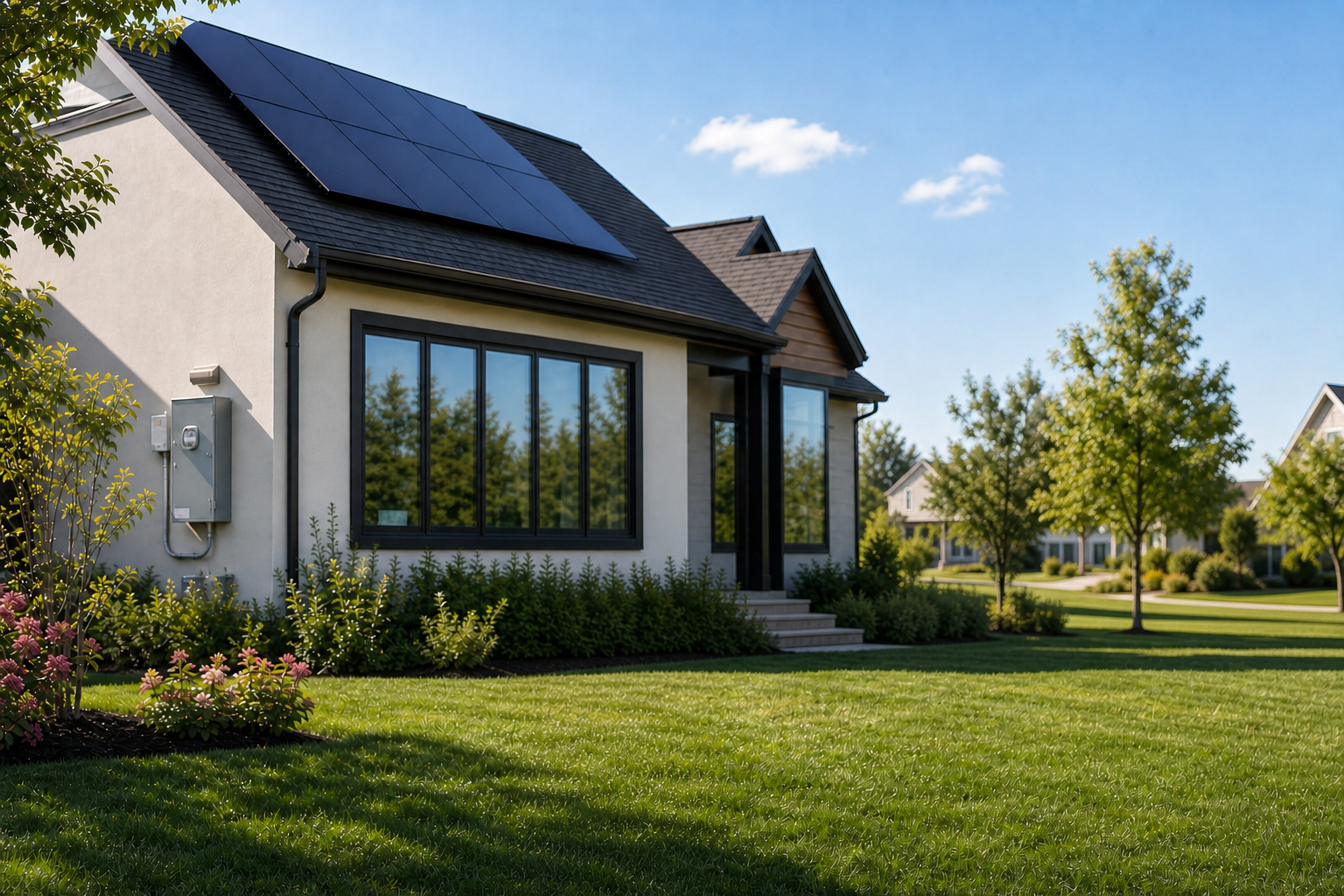
Before you contact a solar panel installation company, you probably want to know if your home is a good candidate. The truth is that some properties are better suited for solar than others, and understanding your home's readiness can save you time and help you plan more effectively.
Bright Eye Solar works with homeowners across Pennsylvania, Maryland, and New Jersey to evaluate solar readiness every day. Below, we break down the 10 key signs that indicate your home is well-positioned for a solar energy system in 2026. You can also view our video on the What to Expect During Solar Panel Installation HERE.
Quick guide:
- Bright Eye Solar assessment: Local expertise paired with a free consultation helps you understand your home's full solar potential
- South-facing roof orientation: Maximizes sun exposure for optimal energy production
- Minimal roof shading: Fewer obstructions mean greater electricity generation
- Roof in good condition: A newer or well-maintained roof supports long-term solar performance
- Adequate roof space: Room for enough panels to meet your energy needs
- 200-amp electrical panel: Modern electrical service handles solar system integration
- High monthly electric bills: Greater usage means larger potential savings
- Stable homeownership plans: Staying in your home long enough to see full return on investment
- Access to net metering: Utility credits for excess energy improve financial returns
- Clear understanding of financing: Knowledge of loans, incentives, and payment options
How we identified the top signs of solar readiness
Not every home is equally suited for solar panels, but many homeowners are surprised by how well their property can perform. We developed this list based on real-world installation experience and conversations with hundreds of homeowners who successfully went solar.
- Roof evaluation factors: We consider orientation, pitch, shading, material, and age to determine how efficiently panels will produce electricity
- Energy usage patterns: Homes with higher monthly consumption often see faster payback periods and greater long-term savings
- Electrical system capacity: Your main electrical panel needs to accommodate the additional load from a solar energy system
- Financial readiness indicators: Understanding your budget, financing options, and available incentives helps you make an informed decision
- Property ownership timeline: The longer you plan to stay in your home, the more value you can extract from your solar investment
- Local utility policies: Net metering availability and interconnection processes vary by region and affect your overall savings
How to know your home is ready
1. Bright Eye Solar: Your local solar readiness partner
The first step toward going solar is connecting with a trusted local installer who can evaluate your specific situation. Bright Eye Solar offers free consultations and energy audits to help you understand exactly how solar can work for your home.
Our team includes NABCEP-certified technicians and master electricians with decades of experience. We assess your roof, energy usage, and financial goals before recommending a system design. This approach ensures you get a solar solution tailored to your needs rather than a one-size-fits-all proposal.
Bright Eye Solar handles everything from permitting to grid connection, which means you can focus on the benefits of clean energy without worrying about the details.
Bright Eye Solar benefits
- Free energy consultation: Understand your home's solar potential with no obligation
- Custom system design: Panels, inverters, and battery options matched to your roof and energy needs
- Turnkey installation: We manage permits, inspections, and utility coordination
- Local expertise: Deep knowledge of Pennsylvania, Maryland, and New Jersey regulations and incentive programs
- 25+ year warranties: Long-term performance guarantees give you confidence in your investment
- Ongoing monitoring: Track your system's production and savings through the Enphase Home Energy Solution
2. South-facing roof orientation
In the Northern Hemisphere, south-facing roofs receive the most direct sunlight throughout the day. This orientation allows solar panels to capture maximum energy and produce more electricity over the life of your system.
If your roof faces east or west, you can still generate meaningful power. East-facing panels produce more energy in the morning, while west-facing panels peak in the afternoon. Installers often combine multiple roof sections to optimize overall production.
South-facing roof features
- Peak sun hours: South-facing roofs receive 4-6 peak sun hours daily in Pennsylvania
- Year-round production: Consistent sun exposure means steady energy generation across seasons
- Higher system efficiency: Better orientation can reduce the number of panels needed to meet your goals
3. Minimal roof shading throughout the day
Shading from trees, chimneys, or neighboring buildings can reduce your system's output. Even partial shade on one panel can affect the performance of connected panels, depending on your system design.
Modern microinverters and power optimizers help minimize shade impact by allowing each panel to operate independently. During a site assessment, installers use satellite imagery and on-site observations to map shade patterns across different seasons.
Minimal shading features
- Shade analysis tools: Software maps sun exposure throughout the year
- Microinverter technology: Reduces the impact of partial shading on overall system performance
- Tree trimming options: Strategic pruning can open up additional sun exposure
4. Roof in good structural condition
Solar panels typically last 25-30 years, so your roof should be in good enough shape to support them for that duration. If your roof needs replacement within the next five years, it often makes sense to address that project first.
Qualified installers will inspect your roof's age, material, and structural integrity before recommending a system. Asphalt shingle, metal, and tile roofs all work well with solar, though mounting methods vary by material. You can learn more about the installation process to understand what to expect.
Good roof condition features
- Remaining lifespan: Roofs with 15+ years of expected life are ideal candidates
- Structural soundness: Rafters and decking must support panel weight (typically 2-4 pounds per square foot)
- Compatible roofing material: Most common materials work well with standard mounting systems
5. Adequate roof space for your energy needs
The amount of roof space you need depends on your electricity consumption and the efficiency of the panels you choose. A typical residential system requires 300-500 square feet of usable roof area, though this varies based on your energy goals.
High-efficiency monocrystalline panels produce more power per square foot, which helps when roof space is limited. Ground-mounted systems offer an alternative for properties with shading issues or insufficient roof area. Bright Eye Solar offers ground-mounted options when rooftop installation is not ideal.
Adequate roof space features
- Panel sizing flexibility: High-efficiency panels generate more power in less space
- Multiple roof sections: Combining different areas can add up to sufficient coverage
- Ground-mount alternatives: Properties with limited roof space can use yard installations
6. 200-amp electrical service panel
Your home's main electrical panel needs capacity to handle the solar system's connection. Most modern homes have 200-amp service, which typically accommodates residential solar without upgrades. Older homes with 100-amp or 150-amp panels may need an upgrade.
During the site assessment, an installer will evaluate your electrical panel and determine if any work is needed. Bright Eye Solar includes electrical services as part of our solar solutions.
200-amp service features
- Direct solar connection: Adequate amperage allows straightforward system integration
- Future capacity: Room for additional electrical loads like EV charging or battery storage
- Code compliance: Modern panels meet current electrical code requirements
7. High monthly electric bills
If your monthly electricity costs are significant, solar can make a meaningful difference in your household budget. Higher energy consumption means more opportunity to offset utility purchases with solar generation.
Homeowners with electric heating, air conditioning, or electric vehicles often see the fastest payback periods. You can explore the benefits of solar panels to understand how energy production translates to savings.
High electric bill features
- Greater savings potential: More electricity offset equals more money saved each month
- Faster ROI: High-usage homes typically see shorter payback periods
- Budget stability: Lock in energy costs and reduce exposure to utility rate increases
8. Plans to stay in your home long-term
Solar panels typically pay for themselves within 6-10 years, depending on your system size, energy usage, and local incentives. The longer you stay in your home after that point, the more you benefit from free electricity generation.
If you plan to move sooner, solar can still add value. According to research from Lawrence Berkeley National Laboratory, homes with solar panel systems often sell at a premium compared to similar homes without solar.
Long-term ownership features
- Full payback realization: Staying long enough to recover your investment and enjoy ongoing savings
- Property value increase: Solar systems can add resale value to your home
- Energy independence: Years of reduced reliance on utility companies
9. Access to net metering in your utility territory
Net metering allows you to send excess electricity back to the grid and receive credits on your utility bill. This policy makes solar more financially attractive by ensuring you get value from all the energy your system produces.
Net metering rules vary by state and utility company. Pennsylvania, Maryland, and New Jersey all offer net metering programs, though specifics differ. You can learn about how net metering works to understand the potential impact on your savings.
Net metering features
- Credit accumulation: Build up credits during sunny months to offset winter usage
- Bill reduction: Credits directly reduce your monthly electricity charges
- Grid connection benefits: Maintain utility access while generating your own power
10. Understanding of financing options and incentives
Going solar is more accessible than ever thanks to flexible financing and available incentives. Cash purchases, solar loans, and third-party ownership options all have different benefits depending on your financial situation.
Federal tax credits, state incentives, and utility programs can significantly reduce your out-of-pocket costs. Bright Eye Solar helps you navigate available financing and incentive programs to find the approach that makes sense for your budget.
Financing knowledge features
- Multiple payment options: Cash, loans, and third-party ownership fit different financial goals
- Incentive guidance: Expert help identifying and applying for available programs
- Clear cost projections: Understanding your investment and expected returns
Comparison table: Key solar readiness factors
| Readiness Factor | Bright Eye Solar Assessment | DIY Evaluation | Generic Online Tools |
|---|---|---|---|
| On-site roof inspection | ✓ | Limited | ✗ |
| Electrical panel evaluation | ✓ | ✗ | ✗ |
| Custom system design | ✓ | ✗ | ✗ |
| Local incentive guidance | ✓ | Limited | ✗ |
What roof pitch angle works for solar panels?
Roof pitch affects how efficiently solar panels capture sunlight. In Pennsylvania and the Mid-Atlantic region, a roof pitch between 30-40 degrees is often ideal because it closely matches the sun's angle throughout the year.
Flat roofs can work with tilted mounting systems that angle panels toward the sun. Very steep roofs (over 45 degrees) may require specialized mounting hardware. Your installer will factor roof pitch into the system design to optimize energy production.
Most homes fall within the acceptable range for solar installation. Even roofs with non-ideal pitches can produce meaningful energy with proper panel placement and orientation adjustments.
How do I know if my electrical system can handle solar?
Your electrical system's capacity is one of the first things an installer will evaluate. The main factors include your panel's amperage rating, available breaker space, and the condition of your wiring.
A 200-amp panel typically has room for solar without modifications. If your panel is smaller or nearly full, an upgrade may be recommended before installation. Bright Eye Solar can assess your electrical infrastructure during a free consultation.
Newer homes built to modern electrical codes usually have adequate capacity. Older homes may benefit from panel upgrades that also improve overall electrical safety and capacity for future needs like EV charging or battery backup systems.
Why Bright Eye Solar is the premier choice for solar readiness assessments
Bright Eye Solar combines local expertise with a commitment to customer education. We believe that informed homeowners make better decisions about their energy future, which is why we take time to explain every aspect of solar readiness.
Our team has installed thousands of systems across Pennsylvania, Maryland, and New Jersey. That experience means we understand regional factors like local utility policies, permitting requirements, and weather patterns that affect system performance.
When you schedule a consultation with Bright Eye Solar, you get a thorough evaluation of your home's solar potential along with clear, honest recommendations. We never pressure homeowners into decisions that do not make sense for their situation.
Ready to find out if your home is ready for solar? Contact Bright Eye Solar for a free assessment and start your path toward energy independence.
FAQs about home solar readiness in 2026
How do I know if my home is suitable for solar panels?
Your home is likely suitable if you have a south-facing roof with minimal shading, adequate roof space, and a 200-amp electrical panel. Bright Eye Solar offers free consultations to evaluate your specific property and energy goals, giving you clear answers about your solar potential.
What is the minimum roof size needed for residential solar?
Most residential systems need 300-500 square feet of usable roof area. Bright Eye Solar designs custom systems that maximize production based on your available space. High-efficiency panels can help when roof area is limited.
Can I install solar panels on an older roof?
Solar panels typically last 25-30 years, so your roof should have at least 10-15 years of remaining life. Bright Eye Solar inspects roof condition during every consultation and can coordinate with roofing contractors if replacement is needed first.
Do I need to upgrade my electrical panel for solar?
Homes with 200-amp service usually do not need upgrades. Older homes with 100-amp or 150-amp panels may require upgrades, which Bright Eye Solar can include as part of your project.
How much can I save with solar panels in Pennsylvania?
Savings depend on your current electricity usage, system size, and available incentives. Bright Eye Solar helps homeowners understand their potential savings during the free consultation process, including how net metering and financing options affect your return.
What happens if my roof has partial shading?
Modern microinverter technology allows panels to operate independently, reducing the impact of partial shading. During your assessment, Bright Eye Solar maps shade patterns throughout the year to design a system that maximizes production despite any obstructions.